Tenant Walls
Fire walls between shops rise through the roof as low parapets. Their flashing opens, and water runs down the wall into either shop.

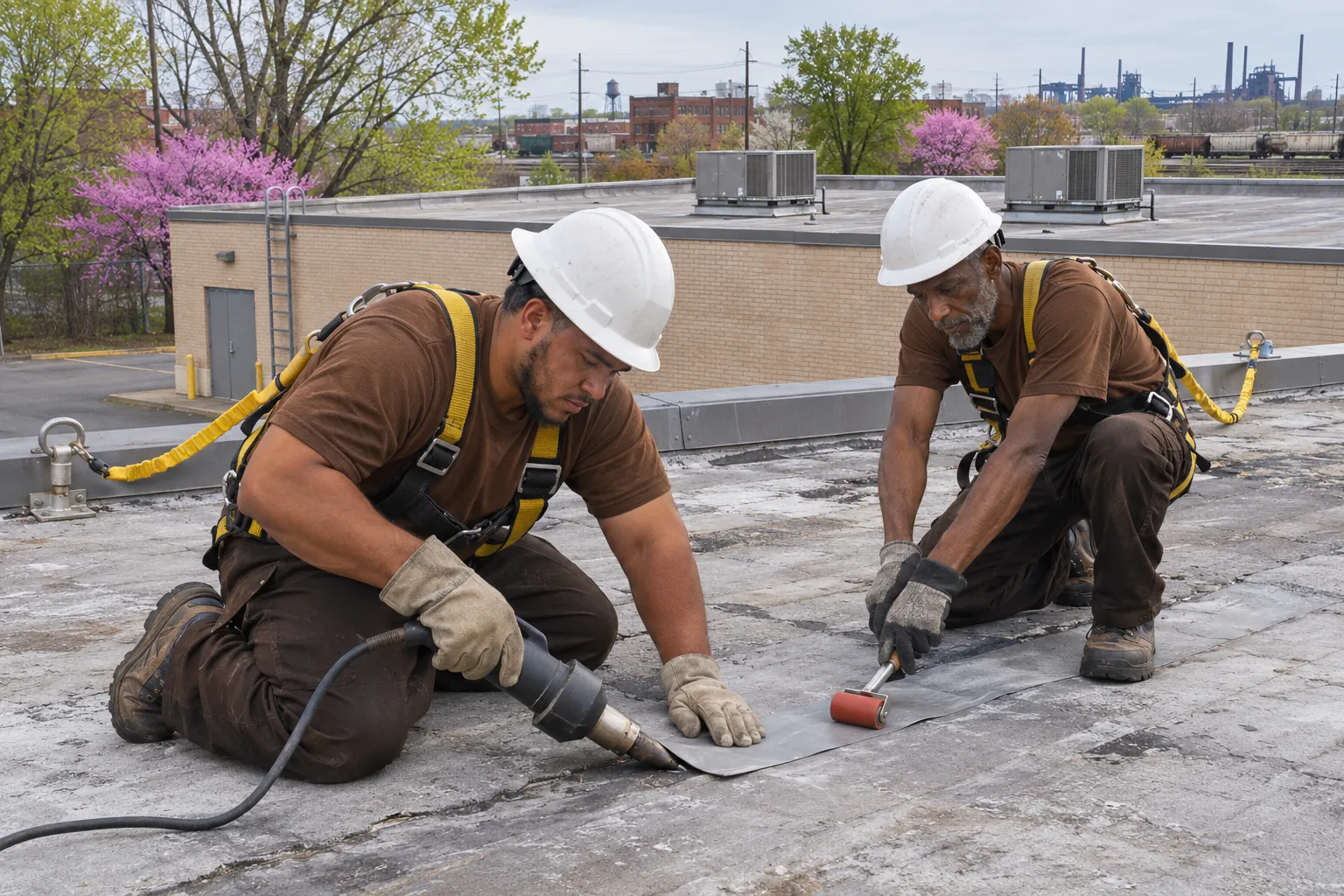
As a Highland commercial roof repair contractor, we trace leaks in strip retail and warehouse buildings from the stain inside to the roof detail letting water in.
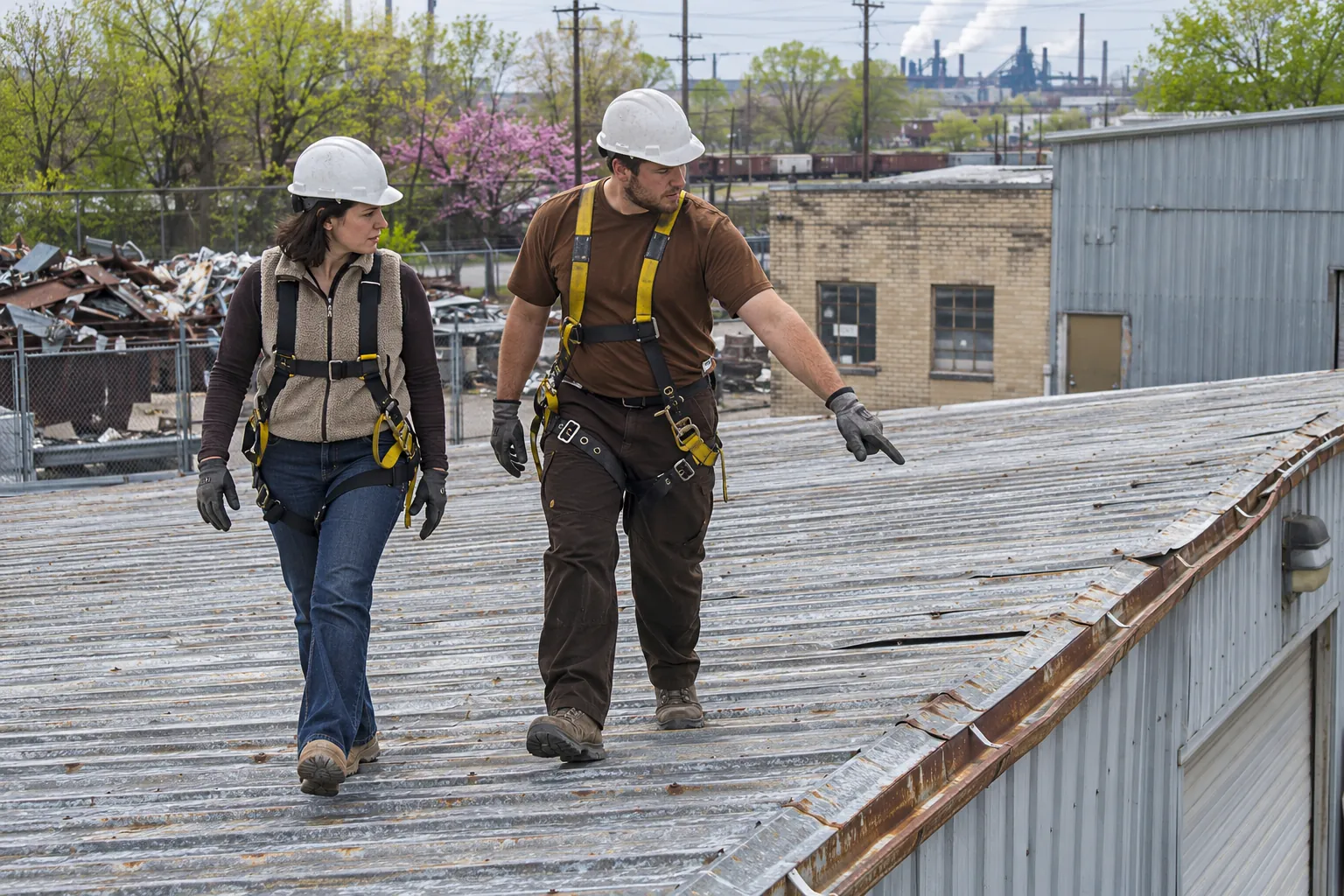
Highland commercial roof repair on strip centers starts in the shop with the stain. One long roof covers many tenants, and water travels across it.
A drip in the third shop can start over the second. We mark the stain, measure it from the front wall, and find that point on the roof before checking the seams, curbs, and drains upslope.
Strip retail and warehouse roofs share a few weak points. These five come up most when we trace leaks here.
Fire walls between shops rise through the roof as low parapets. Their flashing opens, and water runs down the wall into either shop.
Every shop has a rooftop unit. One cracked corner can wet a ceiling two tenants away once water runs along the deck.
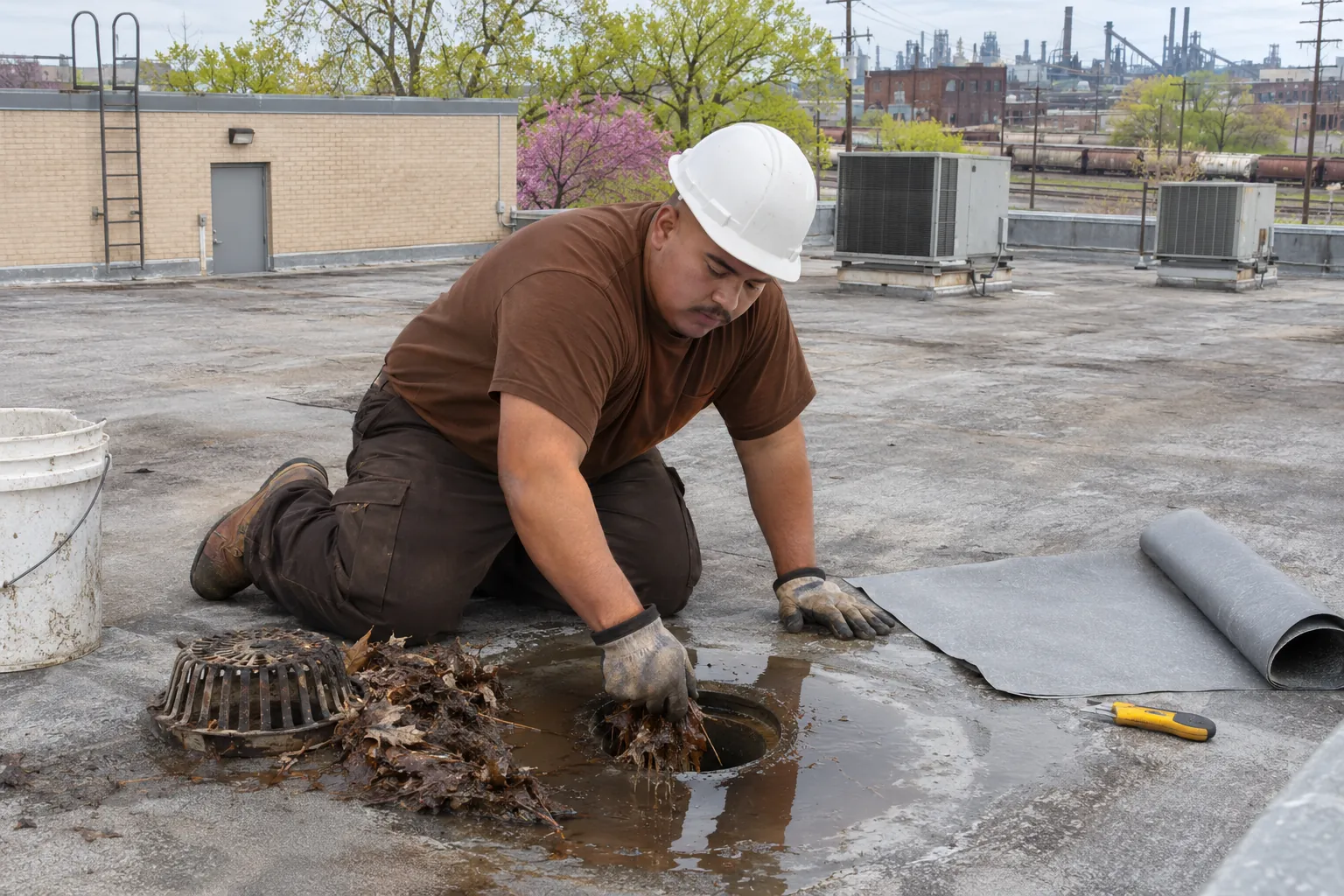
Many strip roofs drain to a rear gutter. When it clogs or ices up, water backs under the roof edge above the stockrooms.
Seams running the length of the building open in one spot and leak far from where they started.
Skylights on warehouse roofs crack and lose their seal, and the drip lands on racks or the floor below.
A traced repair fixes the leak and settles which shop it came from. This is what changes.
Highland strip centers and warehouses use all four of our repair services. Each pair shows where one fits.
Strip retail roofs in Highland are mostly flat membrane. Seams, tenant walls, and rear gutters get flat roof repairs.
Repair Includes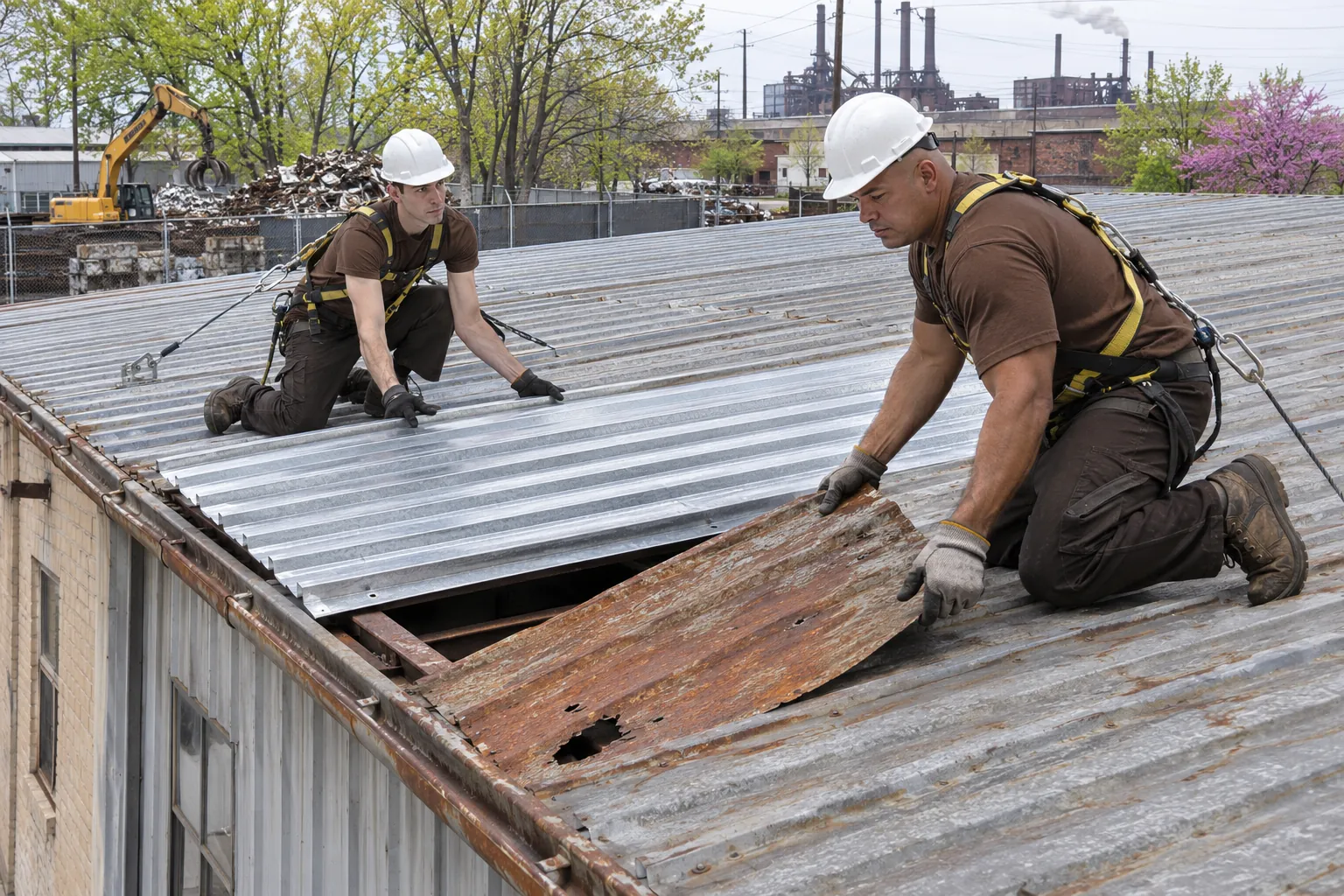
Warehouse and service buildings here sometimes carry metal roofs. Fastener rows, laps, and skylight panels get their own repairs.
Repair Includes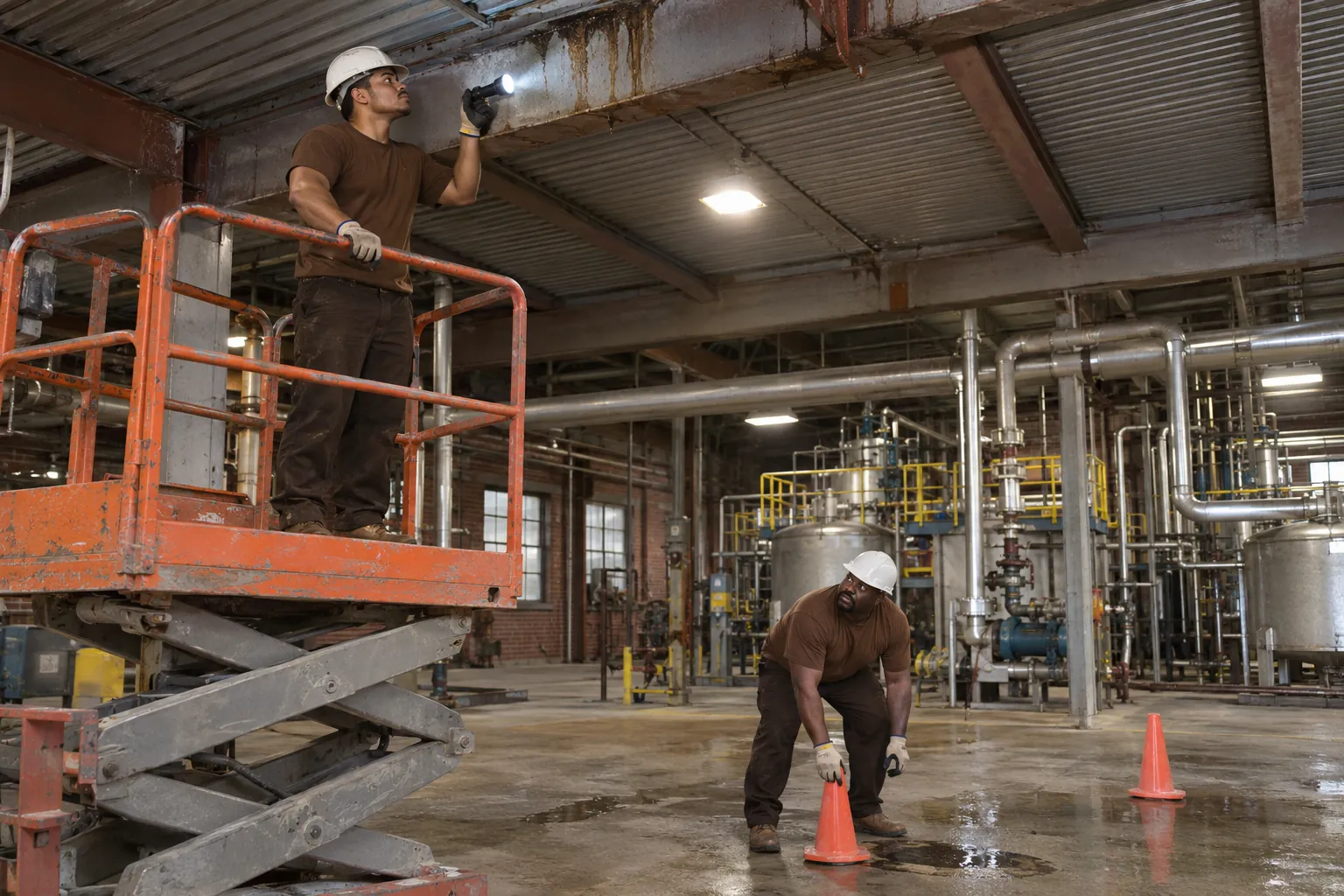
When a stain sits in one shop and the roof above it looks fine, a full trace from inside finds where the water really enters.
Repair Includes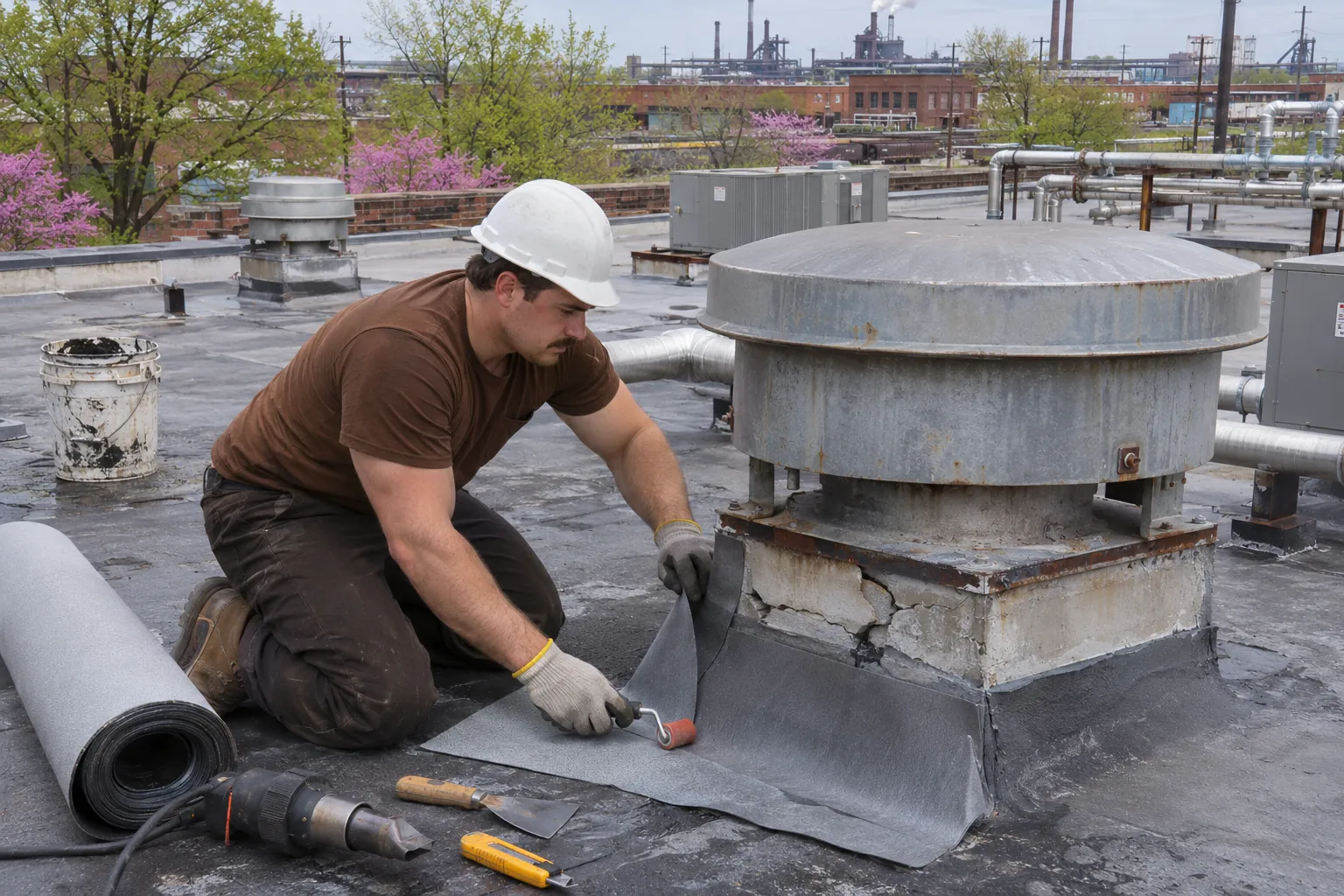
Light industrial and flex buildings in town carry fans and curbs. Industrial repairs rebuild that flashing and clear their drains.
Repair IncludesTell us which unit and where on the ceiling. We measure it inside and trace it across the roof.
(219) 389-4915Call UsLeaks on long shared roofs need careful tracing. These four steps get from the stain to the source.
We note the stain's distance from the front wall and the nearest tenant wall, so the same point can be found on the roof.
On the roof, we mark that point and check seams, curbs, gutters, and walls uphill from it before anything gets cut.
The failed seam, corner, or flashing is repaired, and wet board around it is replaced with new insulation.
Photos show tenants and the owner where the leak started and what was repaired, so everyone works from the same facts.
Strip centers, warehouses, and offices in these towns are where we repair roofs most. Elsewhere? Please call us or send us a message.
| Town | County | What We See On Roofs There |
|---|---|---|
| Hammond Home Base | Lake County | Steel mill support buildings, rail-served warehouses, and church halls |
| Gary | Lake County | Older plant and warehouse roofs repaired one section at a time |
| East Chicago | Lake County | Industrial roofs with exhaust fans, stacks, and process residue |
| Munster | Lake County | Office and retail roofs repaired while tenants stay open |
| Dyer | Lake County | Metal shop and warehouse roofs with worn fastener runs |
Short answers on each row. Open one for the full answer.
We find and repair leaks on commercial roofs across Highland, from strip retail to warehouses. Each leak is traced from inside the building to the roof above, fixed at the source, whether a seam, drain, curb, or wall flashing, and checked for wet insulation around it.
Ask how the roofer plans to find the source on a shared roof, and expect insurance, photos, and a written note of the repair. On strip centers, the trace matters as much as the patch.
Price follows how long the trace takes, the roof type, the size of the damaged area, and how much wet board comes out. Leaks at tenant walls and units take more labor than a patch in the open field.
Very little happens inside: marking the stain and checking ceiling tiles with the tenant's okay. The rest is on the roof, with ladders set at the back of the building away from customers.
That comes down to the lease and the property owner. Our photos and notes show where the water entered and which spaces it reached, so the owner and tenants work from the same record.
Tell us which shop has the stain and where it sits. We trace it to the roof and price the repair before any work starts.