What We Do
Leak Repair
- Where It Drips
- One area, or a few spots
- When It Leaks
- Storms, thaws, or wind from one side
- Source
- A seam, drain, curb, or wall detail
- Insulation
- Wet near the leak only
- Next Step
- Trace, repair, water-test

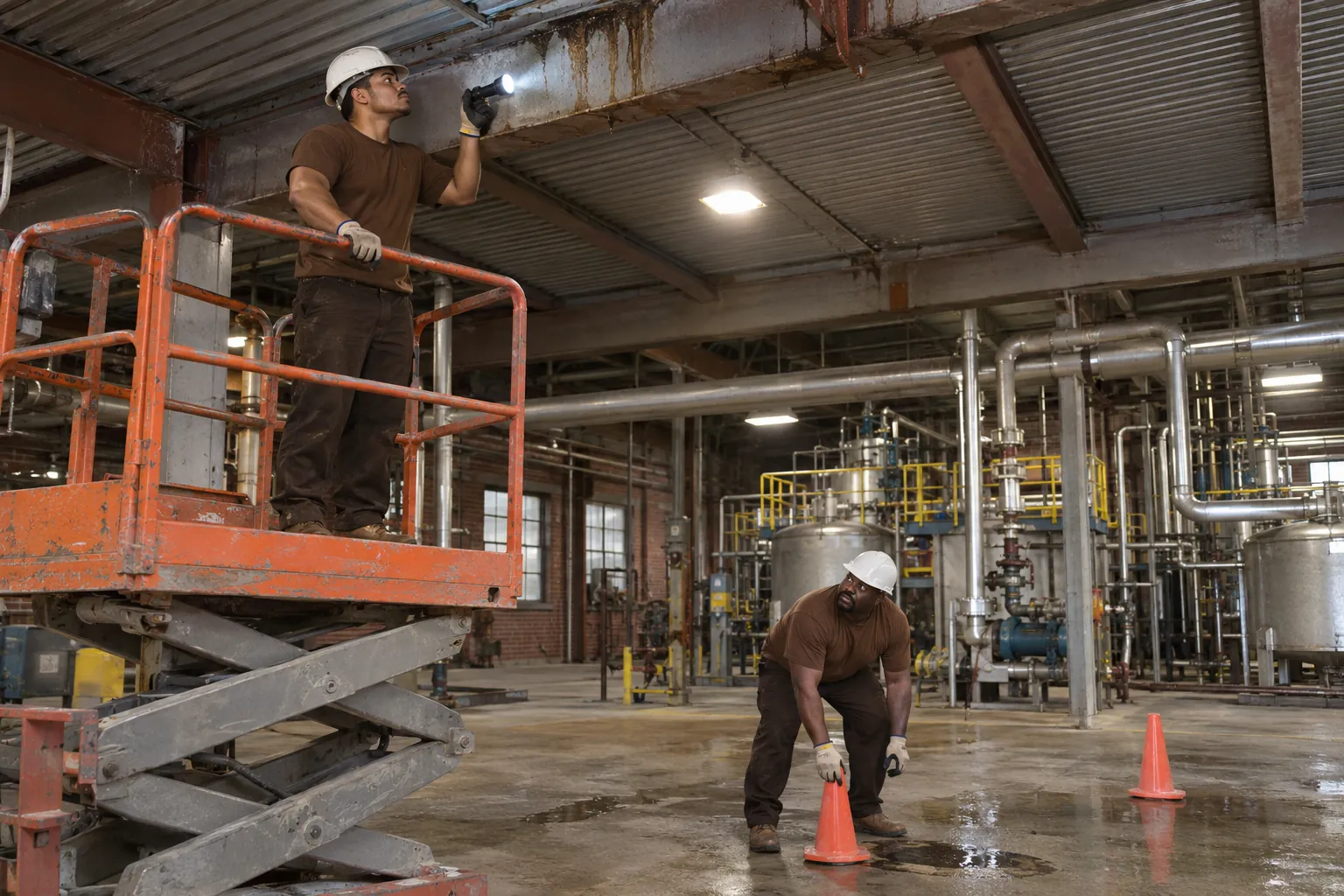
As a Hammond commercial roof leak repair contractor, we trace drips from the ceiling to the seam, drain, curb, or wall where water enters, then repair it.
Hammond commercial roof leak repair covers leaks with a source we can find and close. The raised column is that work; the others show when the roof needs more.
The stain inside rarely sits under the opening. These five sources account for most of the leaks we trace here.
Cracked coping, open joints, and failed counterflashing let water into the wall itself. It runs down inside the masonry and shows up on a ceiling or wall below.
Snowmelt refreezes at cold edges, gutters, and drains. Water pools behind the ice and backs up under laps that were built to shed it.
Large warehouses collect water toward a few drains, so a torn membrane at one bowl or a loose clamp ring lets in a lot of water fast.
Rooftop units, fans, and skylights each have four corners of flashing. One split corner sends water down the curb and into the building.
Storms off the lake push rain sideways into laps and under trim on the windward side, so some leaks only show with wind from one direction.
Coping joints get resealed or reset, cracked counterflashing is replaced, and base flashing that pulled away is reattached and sealed up the wall.
Debris comes out, the clamp ring and bolts are checked, and torn membrane around the bowl is replaced so water leaves through the drain again.
Split corners at rooftop units and skylights are cut back, cleaned, and covered with new corner flashing sealed to the field membrane.
Readings show how far the water spread. Wet board under the repair is cut out and replaced so the leak never comes back as a soft spot.
Leak repair is half tracing and half fixing. These are the four ways we close the source once it is found.
Church halls and older buildings here leak most at walls and roof edges. These changes come with a traced repair.
Set a bucket under it and mark the spot on the floor. Call us, and we start the trace from that mark.
(219) 389-4915Call UsLeak tracing works from the inside out. Each step narrows the search until one detail is left.
Inside, each stain and drip point is marked and photographed, along with when it leaks: hard rain, thaws, or wind from one side.
On the roof, we start above the marks and move uphill along the deck flutes, checking seams, fasteners, curbs, drains, and skylights.
A section-by-section water test or a moisture scan shows which detail lets water in, so the repair goes where the leak actually is.
The source is repaired, wet insulation is replaced, and the area is tested again before we pack up.
Once the source is found, the fix belongs to one kind of roof. These repairs pick it up from there.
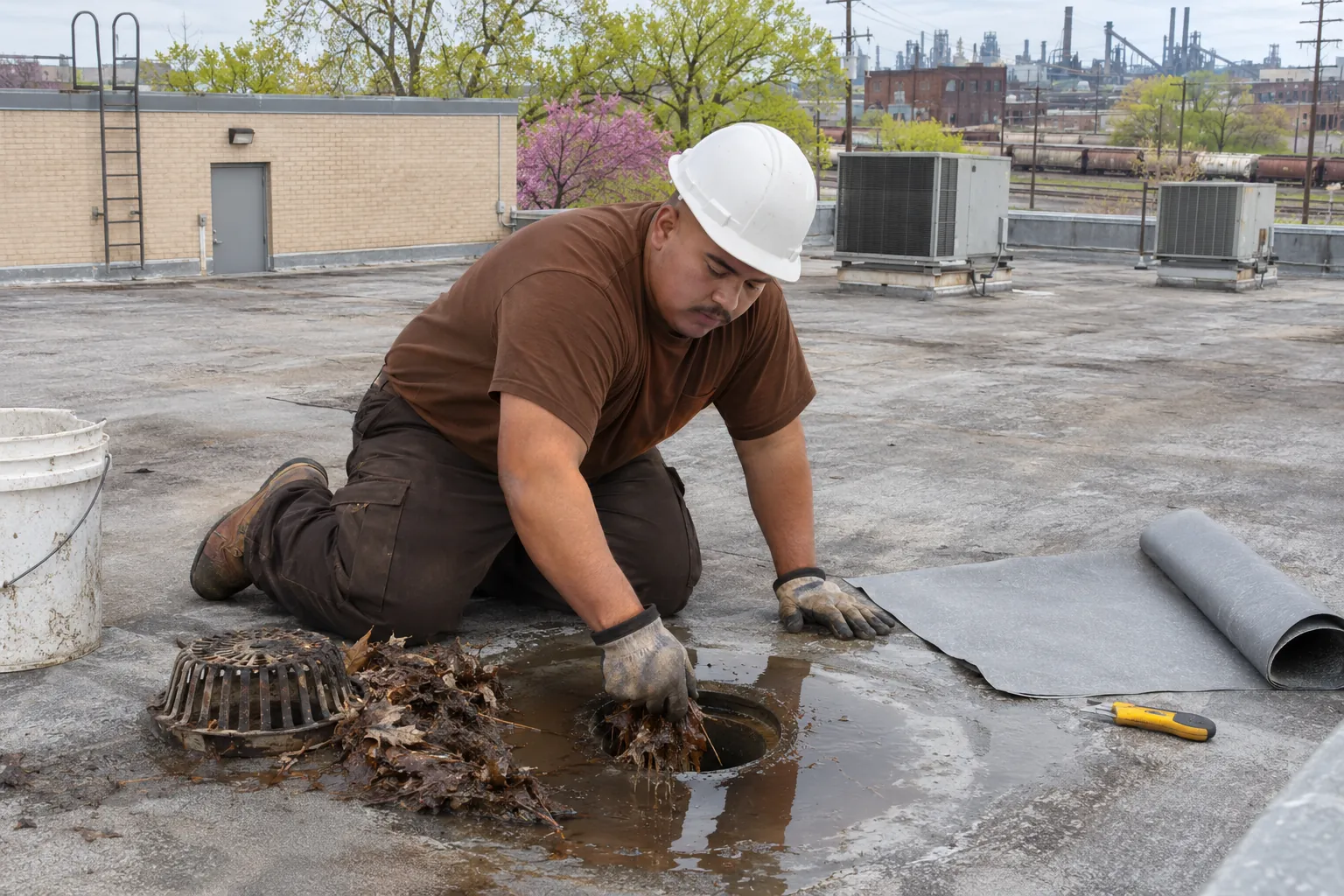
Leaks traced to a drain, a pond, or an open lap on a low-slope roof lead to flat roof repair: drain rebuilds, seam welds, and new insulation.
Repair Includes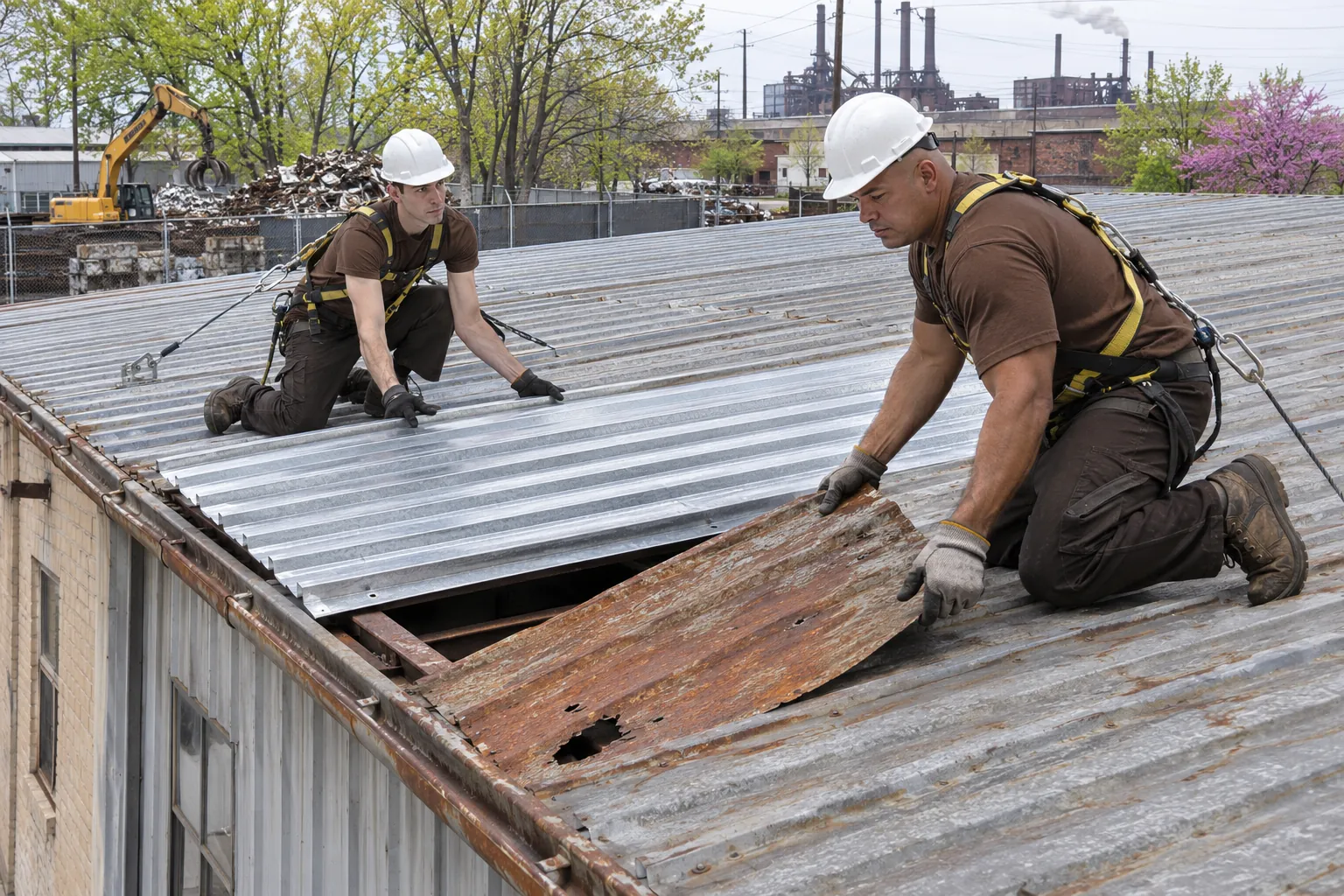
When the trace ends at a screw row, a lap, or a rusted panel, the repair moves to the metal itself: new fasteners, resealed laps, swapped panels.
Repair Includes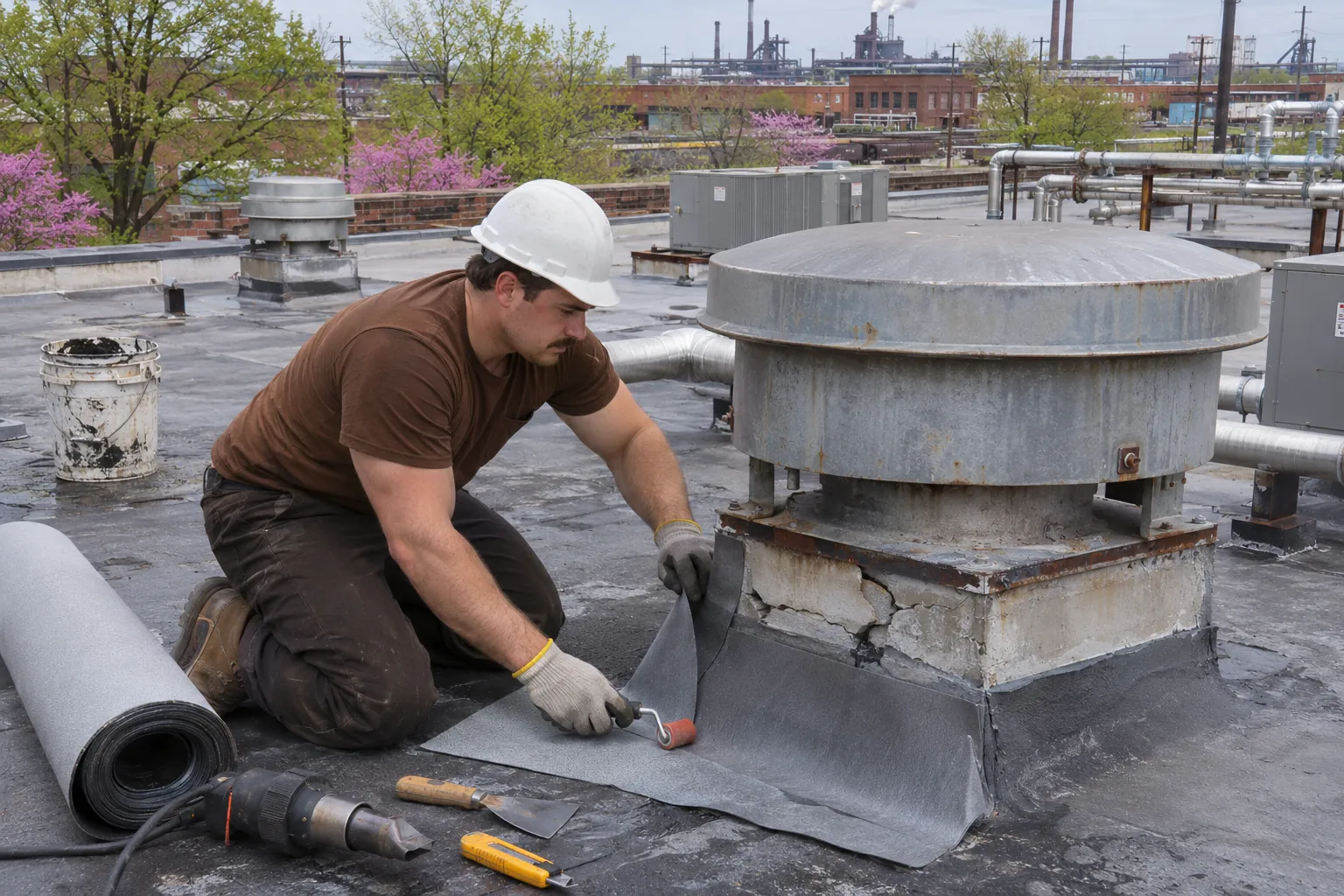
Plant roofs often leak first at exhaust fans and curbs. Industrial repairs rebuild that flashing and cover equipment below while the roof is open.
Repair IncludesThe short answer sits on each row. Open it for the full answer on leaks.
Most parapet leaks come from cracked coping, open coping joints, failed counterflashing, or base flashing that pulled away from the wall. Masonry also soaks up water through mortar joints. We inspect each of those and reseal or replace what failed, so water stops running down inside the wall.
Snowmelt refreezes at cold edges, gutters, and drains, and water collects behind the ice. It backs up under laps, flashing, and seams that were built to shed water rather than hold it. We clear the drains and gutters, seal the affected seams, and look for heat loss melting the snow on cold days.
A commercial roof in good repair stays dry in heavy rain. A leak that shows only in hard storms points to drains that cannot keep up, water rising over short flashing, or seams and penetrations opening under pressure. We check drains, flashing heights, and the roof above the wet spot.
Start inside by marking where water appears, then go up and work uphill from that spot, since water runs along deck flutes before it drips. Seams, fasteners, curbs, drains, and skylights in that area get checked, and a water test or moisture scan confirms the source.
Debris comes out, then the clamp ring, bolts, and bowl are checked for cracks and the membrane for tears. Big rail-served warehouses send water to a few drains, so a small failure there leaks a lot. We reset the clamp ring, replace torn membrane, and confirm the drain flows freely.
Lake-effect snow off Lake Michigan can leave deep snow on roofs in northwest Indiana. As it melts, water gathers at drains, valleys, and parapets, then refreezes overnight, and each cycle works farther into seams and flashing. We check those spots after heavy snow and close openings before the next storm.
Mark where the water shows and send us the address. We trace it to the roof, repair the source, and test it before we leave.